Pro Rider Bike Fit Stats: What You Can Learn Without Copying the Position
Triathlete and founder of BikeFittr
Reduce guesswork
Want the answer for your own bike?
Use this pro rider bike fit stats: what you can learn without copying the position guide as the background, then run a quick BikeFittr check so visitors have a clear next step instead of leaving after reading.
AI bike fit app
Upload one side-view photo and get posture, saddle height, reach, and knee-angle feedback.
Full fit analysis
Start the guided fitting flow when you want the complete setup check.
Angle chart
Compare your knee, hip, back, and arm angles against practical fit ranges.
Popular next steps: Full fit analysis · Angle chart
Searches for bike geometry and bikefitting stats from pro riders usually have the same goal: riders want a concrete setup they can compare with their own bike. That can be useful, but copying a professional cyclist's numbers directly is a fast way to make a bike uncomfortable.
Pro riders typically combine unusual mobility, high weekly volume, race-specific equipment, and years of adaptation. Their fit data is best used as a pattern library, not a prescription.
The Pro Rider Measurements That Actually Matter
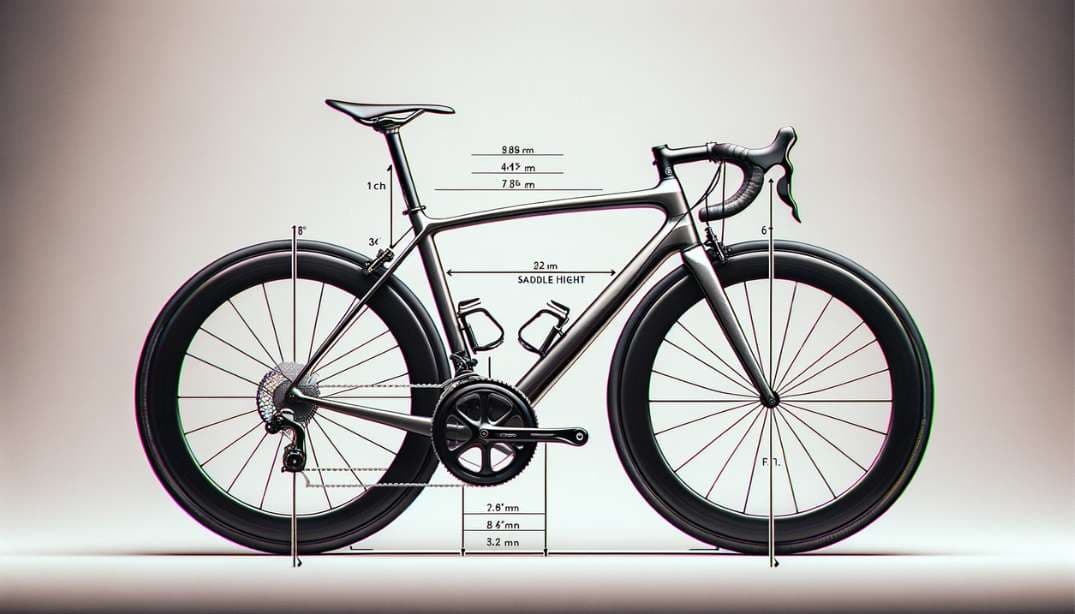
When you compare a pro rider bike fit, focus on relationships between measurements rather than one isolated number:
| Measurement | What it tells you | Why it matters |
|---|---|---|
| Saddle height | Leg extension and knee angle | Too high creates hip rocking; too low overloads knees |
| Saddle setback | Hip position over the bottom bracket | Changes power delivery and reach to the bars |
| Reach to hoods | Cockpit length | Controls shoulder load, back angle, and hand pressure |
| Bar drop | Saddle-to-bar height difference | Drives aerodynamic posture and hip angle |
| Crank length | Pedal circle and hip closure | Shorter cranks can help smaller riders and aggressive positions |
| Handlebar width | Shoulder and breathing position | Narrow bars can be aero but may reduce comfort |
If you only copy saddle height or stem length, you miss the context that makes the pro setup work.
Why Pro Rider Fits Look So Aggressive
Professional road riders often run:
- More saddle-to-bar drop than recreational riders
- Longer effective reach because they ride with stable trunk control
- Narrower handlebars for aerodynamics
- Lower front ends because their hip mobility supports it
- Carefully chosen crank lengths to manage cadence, hip angle, and position
Those choices make sense for racing, but they are not automatically faster for a rider who spends fewer hours on the bike or has less mobility. A lower bar can improve aerodynamics only if you can hold the position without losing power, breathing, or control.
A Safer Way To Use Pro Bikefit Data
Use pro rider stats to create a comparison range:
- Record your current saddle height, setback, bar width, stem length, and crank length.
- Check your riding angles with a side-view photo or the AI bike fit app.
- Compare the pattern: is your cockpit much shorter, your bar much higher, or your crank much longer?
- Change only one variable at a time.
- Re-check knee angle, hip angle, back angle, and hand pressure after each change.
For most riders, the useful lesson from pro bikefitting stats is not "slam the stem." It is "make the position measurable, then adjust deliberately."
How To Compare Your Knee Angle And Saddle Height
Saddle height is the easiest pro rider number to misread. A published saddle height only makes sense with crank length, cleat position, shoe stack, pelvis stability, and how the rider pedals under load. The more useful check is whether your knee angle is in a repeatable range when you are actually riding.
Use pro rider saddle height as a reference, then validate it with your own position:
- Start with the saddle height calculator or the saddle-height AI workflow.
- Check knee angle at the bottom of the pedal stroke instead of trusting inseam formulas alone.
- If the knee angle is too open and your hips rock, lower the saddle in small steps.
- If the knee angle is too closed and the front of the knee feels overloaded, raise the saddle carefully and re-check reach.
This is also where crank length matters. A shorter crank can open hip angle and reduce knee travel while keeping saddle height and cockpit reach easier to control.
Common Mistakes When Copying Pro Setups
Copying Saddle Height From Inseam Alone
Two riders can share the same inseam but need different saddle heights because of ankle movement, pelvis stability, cleat position, and crank length. Use formulas only as a starting point, then validate with knee angle.
Matching Bar Drop Before Checking Hip Angle
Large bar drop closes the hip angle. If your hip angle is already tight at the top of the pedal stroke, a lower front end can make breathing and power worse.
Ignoring Crank Length
Many riders focus on saddle and stem numbers but ignore crank length. A shorter crank can open the hip angle and reduce knee travel without making the bike feel dramatically different.
Reading Geometry Without Fit Coordinates
Frame geometry numbers are useful, but they do not tell the whole story. Spacer stack, stem angle, handlebar reach, saddle model, cleat position, and crank length all change the final rider position.
Use BikeFittr To Compare Your Own Setup
BikeFittr gives you the measurements that make pro rider bike fit stats useful:
- AI bike fit app for posture, knee angle, hip angle, saddle height, and reach checks
- Saddle height calculator for checking seat height against knee angle
- Road bike fit measurements for target ranges and formulas
- Bike fit checklist to record your current fit before changing parts
- Handlebar width and reach calculator for cockpit decisions
- Crank length calculator for hip angle and cadence context
Start with your own numbers, then use pro rider data as a reference point. That is how you get the benefit of bikegeometry research without turning your road bike into a position you cannot hold.
Start your free AI bike fit or go straight to the saddle height calculator if the first number you want to verify is knee angle.
Reduce guesswork
Ready to check your own fit?
Use this pro rider bike fit stats: what you can learn without copying the position guide as the background, then run a quick BikeFittr check so visitors have a clear next step instead of leaving after reading.